

1. Introduction
Customs value is one of the most important elements of an import entry. It affects duty, merchandise processing fee, tariff exposure, antidumping and countervailing duty calculations when applicable, and the accuracy of financial reporting tied to landed cost.
One area that frequently creates compliance risk is the treatment of assists. Many importers focus only on the supplier’s commercial invoice price, but U.S. customs valuation rules may require certain buyer provided items, services, tools, molds, materials, designs, or production support to be added to the customs value.
This matters because an invoice price may look correct from a purchasing perspective, but still be incomplete for customs purposes. If assists are not identified, valued, documented, and declared properly, the importer may understate dutiable value and create exposure during CBP reviews, audits, CF28 requests, prior disclosure evaluations, or post entry corrections.
Under U.S. valuation law, transaction value is generally the price actually paid or payable for imported merchandise when sold for exportation to the United States, plus certain statutory additions, including packing costs, selling commissions, assists, certain royalties or license fees, and certain proceeds that accrue to the seller. These additions apply only when they are not already included in the price and are supported by sufficient information.
2. Regulatory and Policy Context
The primary legal authority for customs valuation is 19 U.S.C. 1401a, which sets out the valuation methods used to appraise imported merchandise. The preferred method is transaction value, when it is legally acceptable and properly supported.
CBP regulations in 19 CFR Part 152 provide the appraisement rules and explain how transaction value is determined. Under 19 CFR 152.103, transaction value includes the price actually paid or payable, plus specific additions. One of those additions is the value, apportioned as appropriate, of any assist.
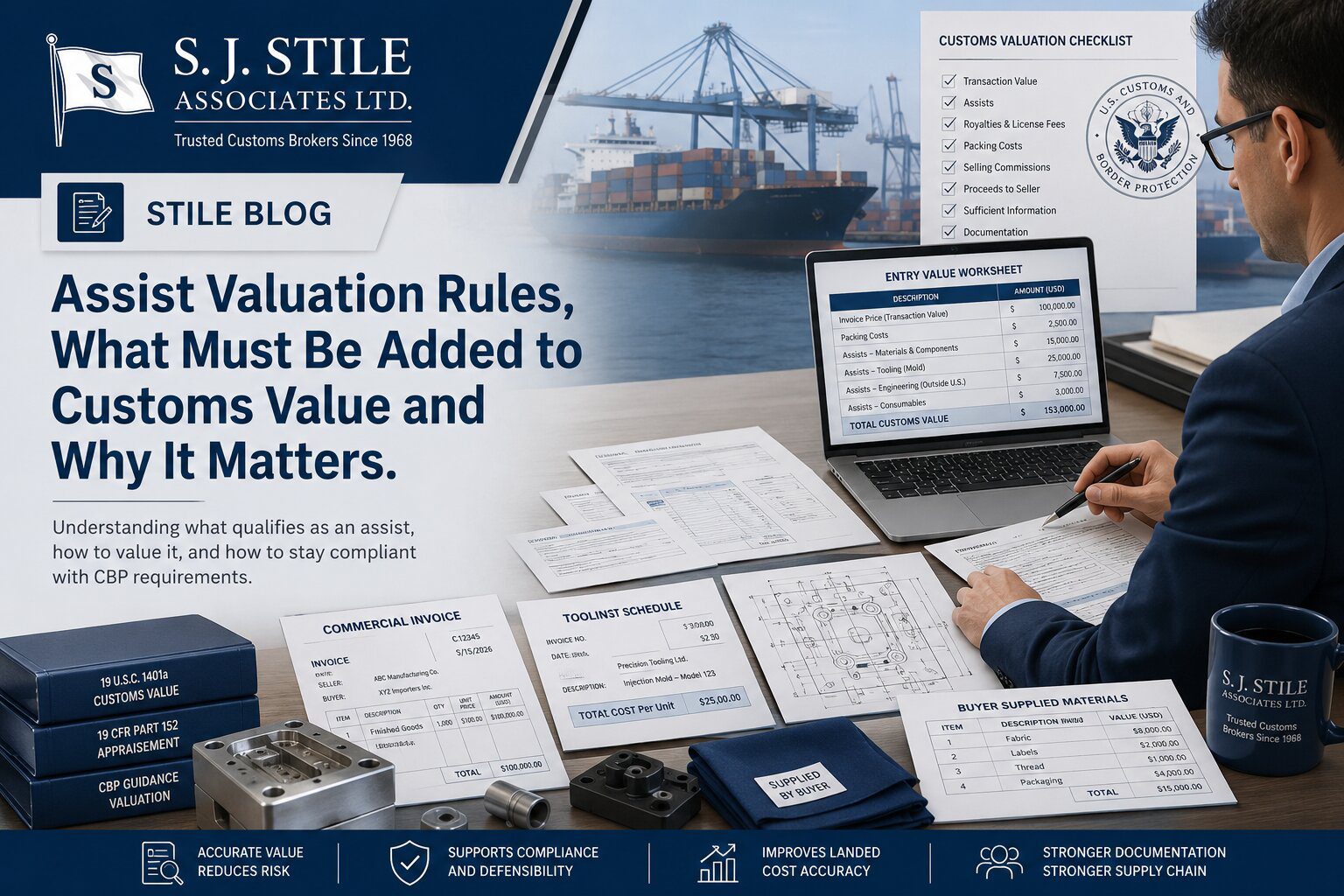
For customs purposes, an assist generally means something supplied directly or indirectly by the buyer, free of charge or at reduced cost, for use in connection with the production or sale for export to the United States of the imported merchandise. The statutory categories include:
- Materials, components, parts, and similar items incorporated into the imported merchandise.
- Tools, dies, molds, and similar items used in producing the imported merchandise.
- Merchandise consumed in producing the imported merchandise.
- Engineering, development, artwork, design work, plans, and sketches undertaken outside the United States and necessary for production of the imported merchandise.
The law also provides an important limitation. Certain design or engineering work undertaken in the United States may not be treated as an assist when the statutory conditions are met. For example, CBP regulations state that design work undertaken in the United States may not be added to the price actually paid or payable, while molds supplied free of charge to a foreign producer may be a required addition to transaction value.
3. What CBP Expects From Importers
CBP expects importers to exercise reasonable care in declaring value. For assist valuation, this means importers should not rely only on the vendor’s invoice. They should review the full sourcing, purchasing, engineering, and production arrangement.
An importer should ask whether it provided anything to the foreign supplier that helped produce the imported goods. Common examples include:
- A mold provided to a factory at no charge.
- Tooling paid for by the importer, but used by the foreign manufacturer.
- Fabric, labels, packaging components, or parts supplied by the buyer.
- Artwork, product design, technical drawings, patterns, or engineering work created outside the United States.
- Testing fixtures or production equipment used in the manufacturing process.
- Materials consumed during production, even if not physically present in the finished imported article.
The key compliance question is not simply whether the supplier invoiced the item. The better question is whether the buyer supplied something of value, directly or indirectly, free of charge or at reduced cost, for use in producing or selling the imported merchandise for export to the United States.
CBP regulations also require sufficient information to support additions to value. If sufficient information is not available, transaction value may be treated as not determinable.
4. What must be added to Customs Value.
A. Materials, Components, and Parts Incorporated Into the Imported Merchandise
If the buyer supplies materials, parts, components, labels, fabric, electronics, or similar items that become part of the imported merchandise, the value of those items may need to be added to customs value if not already included in the supplier’s invoice price.
Example: A U.S. importer buys fabric and sends it to a foreign apparel manufacturer at no charge. The factory invoices only the cutting, sewing, and finishing cost. The fabric value may need to be added to the customs value because it was supplied by the buyer and incorporated into the imported garments.
B. Tools, Dies, Molds, and Similar Production Items
Tooling is one of the most common assist issues. If the importer purchases or provides molds, dies, fixtures, tooling, or similar production items used by the foreign manufacturer, the value may need to be added.
CBP regulations provide that if tools, dies, molds, or similar items are acquired from an unrelated seller, the assist value is generally the cost of acquisition. If produced by the buyer or a related person, the value is generally the cost of production. Transportation costs to the place of production are included. If the assist was previously used, its original cost may be adjusted downward to reflect prior use.
C. Merchandise Consumed in Production
Some items do not appear in the finished product but are consumed during manufacturing. These can still be assists if supplied by the buyer and used in producing the imported merchandise.
Example: A buyer provides chemicals, catalysts, lubricants, or production supplies that are consumed during manufacturing. Even if they are not part of the finished item, they may still affect customs value.
D. Engineering, Development, Artwork, Design Work, Plans, and Sketches Undertaken Outside the United States
Engineering, development, artwork, design work, plans, and sketches may be assists when they are undertaken outside the United States and are necessary for production of the imported merchandise.
This area requires careful review because facts matter. Work performed in the United States may be treated differently from work performed outside the United States. Also, not every creative or technical activity is automatically dutiable. Importers should document where the work was performed, who performed it, who paid for it, whether it was necessary for production, and whether its value is already included in the invoice price.
5. How Assist Value Is Determined and Apportioned
The assist value must be determined and then apportioned to the imported merchandise in a reasonable manner.
CBP regulations provide practical valuation rules:
- If the assist consists of materials, components, parts, or consumed items acquired from an unrelated seller, the value is generally the acquisition cost.
- If the assist was produced by the buyer or a related person, the value is generally the cost of production.
- Transportation costs to the place of production are included.
- For tools, dies, molds, and similar items, prior use may justify a downward adjustment.
- Repairs or modifications may increase the assist value.
- The assist value may be apportioned over the first shipment, units produced up to the first shipment, the entire anticipated production, or another method that is reasonable and consistent with generally accepted accounting principles.
This apportionment issue is especially important for CFOs and compliance teams. A tooling charge may be paid once, but its customs value impact may apply across many shipments. Without a documented apportionment method, the importer may either under declare value, overpay duty, or create inconsistent entry practices.
6. Why Assist Valuation Matters.
Assist valuation affects more than duty calculation. It touches several areas of importer risk.
Duty and Tariff Exposure
When an assist is omitted, the entered value may be understated. This can result in unpaid duty, unpaid fees, and inaccurate tariff calculations.
Entry Accuracy
The customs broker files entries based on information supplied by the importer. If the importer does not disclose assists, the broker may not know that the invoice value is incomplete for customs purposes.
Recordkeeping Risk
Importers must maintain records that support the entered value. Assist documentation may include purchase orders, tooling invoices, mold amortization schedules, engineering invoices, production agreements, design records, payment records, transportation charges to the factory, and internal accounting support.
Audit and Review Exposure
Assist issues may surface during CBP inquiries, focused assessments, audits, CF28 requests, reconciliation reviews, and prior disclosure evaluations.
Financial Reporting and Landed Cost Accuracy
If assist values are not captured properly, landed cost reporting may be distorted. This can affect product profitability, pricing decisions, inventory costing, and duty accruals.
7. Common Compliance Gaps.
Importers often miss assists because the information is spread across different departments.
Common gaps include:
- Purchasing pays for tooling, but compliance is not notified.
- Engineering sends design files to a foreign supplier, but no one reviews whether the work was performed outside the United States.
- Finance books mold costs as a capital asset, but does not connect them to import entry valuation.
- Product teams provide packaging, labels, or components to suppliers without alerting the customs broker.
- Suppliers invoice only labor or assembly, while buyer supplied materials are omitted from customs value.
- Importers do not maintain an apportionment schedule for molds or tooling.
- Assist values are added inconsistently from shipment to shipment.
- Transportation costs to the production location are not included when required.
- Prior use, modification, or repair of tooling is not documented.
- The importer assumes that because an item was not on the commercial invoice, it has no customs value impact.
8. Practical Steps for Importers
Importers should build assist review into their normal sourcing and import compliance process.
Step 1. Create an Assist Questionnaire
Ask purchasing, engineering, product development, finance, and logistics whether the company provides anything to foreign manufacturers at no charge or reduced cost.
Step 2. Review Supplier Agreements
Look for language covering tooling, molds, product development, buyer supplied materials, design ownership, engineering support, and reimbursement arrangements.
Step 3. Identify the Country Where Design or Engineering Work Was Performed
This is critical for technical work, artwork, plans, and sketches. Work undertaken outside the United States may require different treatment from work undertaken in the United States.
Step 4. Maintain Cost Records
Keep invoices, payment records, accounting entries, transportation costs to the place of production, and supporting documents showing whether the assist was acquired, leased, produced internally, previously used, modified, or repaired.
Step 5. Establish an Apportionment Method
Use a consistent and documented method. If a mold supports 10,000 units, the importer should document whether the assist value is declared on the first shipment, over units already produced, over anticipated production, or another reasonable method.
Step 6. Notify the Customs Broker Before Entry
Assist information should be provided before the broker files the entry. Waiting until after liquidation may limit options and increase correction complexity.
Step 7. Monitor Changes
If tooling is repaired, modified, reused, moved to another factory, or used for production in multiple countries, the valuation treatment should be reviewed again.
Step 8. Use Post Entry Corrections When Needed
If an assist was missed on an unliquidated entry, importers should consult their customs broker or trade counsel regarding available correction options. If the issue is broader or historical, a prior disclosure analysis may be appropriate.
9. How S. J. Stile Associates Can Help
S. J. Stile Associates Ltd. helps importers identify customs valuation risks before they become entry problems. Our team can assist with reviewing invoice values, assist disclosures, tooling and mold arrangements, buyer supplied materials, valuation support documents, and broker entry instructions.
As customs brokers, we rely on accurate information from importers, but we also help clients ask the right questions. Assist valuation is a good example of where coordination between purchasing, finance, engineering, logistics, and customs compliance can prevent avoidable duty exposure.
Our role is to help importers improve documentation, communicate valuation adjustments clearly, and support more accurate customs entries.
10. FAQs
1. What is an assist in customs valuation?
An assist is generally something supplied by the buyer, directly or indirectly, free of charge or at reduced cost, for use in producing or selling imported merchandise for export to the United States. Examples include buyer supplied materials, molds, tools, dies, consumed production items, and certain foreign engineering or design work.
2. Are molds and tooling always dutiable assists?
Not always, but molds, dies, tools, and similar production items supplied by the buyer for use in producing imported merchandise are commonly treated as assists when their value is not already included in the invoice price. The facts and documentation matter.
3. Does U.S. design work have to be added to customs value?
Generally, design work undertaken in the United States is treated differently from design work undertaken outside the United States. CBP regulations provide an example stating that design work undertaken in the United States may not be added to the price actually paid or payable.
4. What if the supplier already included the tooling cost in the invoice price?
If the value is already included in the price actually paid or payable, it generally should not be added again. The importer should keep documentation showing that the cost was included.
5. Can assist value be spread over multiple shipments?
Yes. CBP regulations allow assist value to be apportioned in a reasonable manner appropriate to the circumstances and consistent with generally accepted accounting principles.
6. Who is responsible for telling the broker about assists?
The importer is responsible for providing complete and accurate information needed for entry. The customs broker can help identify questions and apply the information, but the importer must disclose buyer supplied items, tooling, engineering, and related costs that may affect value.
7. What happens if assists were not declared?
The importer should review the scope of the issue, affected entries, liquidation status, duty impact, and available correction options. Depending on the facts, the importer may need post entry corrections, protests, reconciliation review, or prior disclosure analysis.
11. References
- 19 U.S.C. 1401a, Value, official U.S. Code text through GovInfo.
- 19 CFR Part 152, Classification and Appraisement of Merchandise, eCFR.
- 19 CFR 152.103, Transaction Value, eCFR provisions on additions to price actually paid or payable, assists, sufficiency of information, and apportionment.
- CBP, Customs Value, Informed Compliance Publication, official CBP publication listing.
- CBP, Customs Valuation Encyclopedia 1980 to 2021, official CBP guidance publication.
The Stile Associates Advantage
- More than 55 years of continuous industry experience
- Family leadership with modern trade vision
- Licensed Customs Brokers and compliance professionals
- CTPAT certified supply chain security
- Full service customs and logistics solutions
- Technology driven visibility and control
- Dedicated, personalized client service
- Nationwide U.S. coverage with global support
Choosing S.J. Stile Associates means partnering with a customs broker that understands the realities of today’s trade environment and is fully invested in protecting your business.
Contact S.J. Stile Associates today to learn how we can strengthen your compliance posture and streamline your supply chain.


We’re not just a broker; we’re your strategic compliance partner.
Since 1968, our clients have trusted us to:
- Navigate regulatory shocks
- Deliver personal service from our NYC, Miami, and LA offices
- Build resilient import strategies that drive growth
In this new trade era, trust is everything , and that’s why importers stay with Stile for years.

Call to Action
At Stile Associates, we combine over 55 years of experience with the latest technology to keep your imports compliant and efficient.
Contact us today to explore how AI-driven solutions can optimize your customs operations.


📣 Final Call to Action:
Ready to take control of your shipping costs?
Let’s talk. Contact Stile Associates for a free consultation and let our experts audit your current process, to help you streamline your operations, stay compliant, and save money.

💼 Choose Stile, Your Smartest Move in Global Trade
Whether you’re shipping across the country or across continents, Stile Associates is your strategic partner for building a smarter, more resilient supply chain.
📍 Since 1968, we’ve been delivering peace of mind and performance. Let’s take your logistics to the next level together.
🌐 Visit us at www.stileintl.com
📩 Or contact: stevenheid@stileintl.com
Stile Associates – Trusted. Proven. Personal.
Stile Real Time Cargo Tracking with Global Visibility.

