

INTRODUCTION
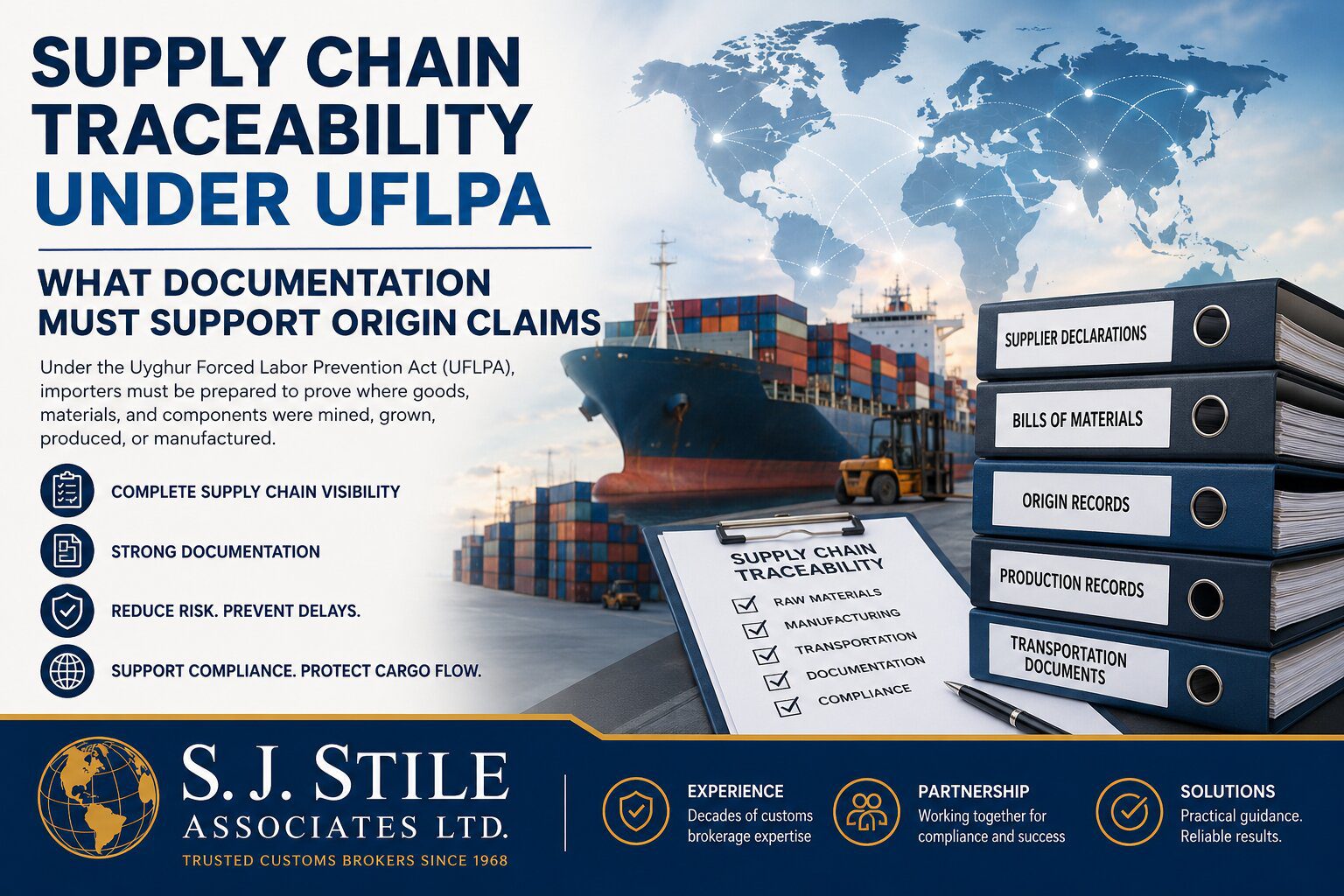
Under the Uyghur Forced Labor Prevention Act, importers cannot rely only on supplier statements or country of export documents to support origin claims. U.S. Customs and Border Protection expects importers to know where goods, materials, components, and inputs were mined, grown, produced, processed, assembled, or manufactured. This is especially important when goods have any connection to China, high risk sectors, or complex multi tier supply chains.
The UFLPA created a rebuttable presumption, effective June 21, 2022, that goods mined, produced, or manufactured wholly or in part in Xinjiang, or by an entity on the UFLPA Entity List, are prohibited from entry into the United States unless the importer can overcome that presumption with clear and convincing evidence.
For importers, the practical question is direct: can you prove the origin of every material and every supplier tier before CBP asks for it?
Why Supply Chain Traceability Matters
CBP’s forced labor enforcement is not limited to the final factory or the country of export. A shipment exported from Vietnam, Malaysia, Mexico, Taiwan, India, or another third country may still present UFLPA risk if raw materials, components, intermediate goods, or processing steps are connected to Xinjiang or to a listed entity.
CBP states that importers are responsible for due diligence, effective supply chain tracing, and supply chain management measures to ensure goods are not made wholly or in part with forced labor.
This means the importer must be prepared to document the full chain of custody, not simply the last sale before export.
What CBP Expects From Importers
A strong UFLPA file should show that the importer has done more than request a general certification. It should demonstrate a controlled compliance process.
At a minimum, importers should maintain documentation covering:
- Supplier identification
- Raw material origin
- Production records
- Transportation and custody
- Purchase and payment trail
- Factory and labor due diligence
- Screening against the UFLPA Entity List
- Internal review and escalation procedures
The DHS UFLPA Entity List identifies entities connected to forced labor concerns in China, and the 2025 UFLPA Strategy update reported that 78 entities were added during the prior year, bringing the total to 144 Chinese entities at that time. The same update also designated caustic soda, copper, lithium, red dates, and steel as new high priority sectors for UFLPA enforcement.
Core Documentation That Should Support Origin Claims
1. Complete Supply Chain Map
Importers should maintain a written supply chain map showing each party involved in the production of the goods. This should include:
- Raw material supplier
- Processor
- Component manufacturer
- Subcontractor
- Assembler
- Exporter
- Trading company
- Freight forwarder
- Country and facility location for each production step
The map should connect each supplier tier to the finished imported product. A general vendor list is not enough. CBP may expect the importer to identify the path from raw material to finished good.
2. Bills of Materials
The bill of materials should identify every material, part, component, ingredient, fiber, chemical, metal, or input used in the finished product.
For each input, the importer should be able to support:
- Item description
- Supplier name
- Manufacturer name
- Country of origin
- Production location
- Quantity used
- Lot number or batch number, when applicable
- Link to purchase orders and production records
This is especially important for textiles, apparel, electronics, solar products, batteries, chemicals, metals, food products, and goods with inputs that may pass through several processing countries.
3. Raw Material Origin Records
Origin documentation must go beyond the country of export. Importers should collect records showing where raw materials were grown, mined, harvested, produced, or first processed.
Examples include:
- Cotton origin records
- Yarn spinning records
- Fabric mill records
- Mining or smelting documentation
- Agricultural harvest records
- Chemical feedstock origin records
- Supplier affidavits supported by production records
- Certificates of analysis, where applicable
- Lot traceability records
For some commodities, CBP has recognized additional traceability methods such as isotopic testing as a possible supporting tool when submitted with broader supply chain documentation.
4. Production and Manufacturing Records
The importer should maintain records that prove where the merchandise was made and how the specific shipment was produced.
Useful records may include:
- Production orders
- Work orders
- Factory production logs
- Cutting, sewing, assembly, blending, or processing records
- Batch records
- Inventory withdrawal records
- Quality control reports
- Packing records
- Finished goods inspection reports
The records should match the shipment being imported. Generic factory brochures, website screenshots, or unsupported supplier letters usually do not prove the origin of a specific shipment.
5. Purchase Orders, Invoices, and Payment Records
The commercial trail should support the movement of goods and materials through the supply chain.
Importers should retain:
- Purchase orders
- Commercial invoices
- Supplier invoices
- Payment confirmations
- Bank records
- Contracts
- Sales confirmations
- Packing lists
- Delivery notes
The documents should be consistent. CBP may question discrepancies in supplier names, addresses, quantities, dates, product descriptions, or country references.
6. Transportation and Chain of Custody Records
The importer should be able to show how goods and inputs moved between each supplier tier.
Relevant records include:
- Bills of lading
- Air waybills
- Trucking records
- Warehouse receipts
- Container load plans
- Delivery orders
- Export declarations
- Import declarations in intermediate countries
- Inventory transfer records
The goal is to show custody from raw material or component origin through final export to the United States.
7. Supplier Certifications and Declarations
Supplier certifications are helpful, but they should not be the only evidence.
A useful supplier declaration should:
- Identify the exact product
- Identify the relevant shipment or purchase order
- State the production facility
- Identify upstream suppliers
- Confirm no Xinjiang content or listed entity involvement
- Be signed by an authorized officer
- Be supported by production, origin, and transaction records
A broad statement such as “our goods are UFLPA compliant” is weak if it is not backed by traceable records.
8. UFLPA Entity List Screening
Importers should screen all known parties against the UFLPA Entity List and keep evidence of the screening.
Screening should include:
- Direct supplier
- Manufacturer
- Factory
- Parent company
- Subsidiaries
- Trading companies
- Raw material suppliers
- Component suppliers
- Logistics parties, where relevant
Screening should be repeated periodically because the Entity List can change. DHS maintains the UFLPA Entity List as the official source for listed entities.
The Difference Between Country of Export and Origin Proof
A common importer mistake is confusing the country of export with the origin of the materials.
For example, an apparel shipment may be exported from Vietnam, but the cotton, yarn, fabric, dyeing, trimming, or packaging may involve other countries or suppliers. Under UFLPA, CBP may look beyond the final assembly location.
The same principle applies to electronics, chemicals, batteries, solar components, metals, food products, and industrial inputs. Final assembly outside China does not eliminate UFLPA risk if any part of the supply chain includes prohibited inputs or listed entities.
High Risk Documentation Gaps
Importers should review their files for common weaknesses, including:
- Supplier refuses to identify upstream suppliers
- Documents only cover the finished goods factory
- Raw material origin is missing
- Bills of materials are incomplete
- Production records do not match shipment quantities
- Invoices show trading companies but not manufacturers
- Facility names differ across documents
- Certifications are generic or unsigned
- No evidence of UFLPA Entity List screening
- No internal written forced labor compliance procedure
These gaps can delay release, weaken detention responses, and increase the risk of denied entry. reduce avoidable mistakes, and respond more effectively when CBP questions an entry.
What Importers Should Prepare Before a Shipment Moves
The best time to prepare a UFLPA file is before purchase, before production, and before export.
A practical importer checklist should include:
- Confirm whether the product falls within a high risk sector.
- Identify every supplier tier.
- Obtain raw material origin documentation.
- Collect production records tied to the shipment.
- Screen all parties against the UFLPA Entity List.
- Review supplier names, addresses, dates, and quantities for consistency.
- Keep the full document package in the import file.
- Train purchasing, logistics, and compliance teams to escalate missing documentation.
- Ask suppliers to contractually support traceability requests.
- Review the file before goods depart the foreign port.
This preparation supports reasonable care and helps the broker respond more effectively if CBP issues a detention notice or request for information.
How Stile Associates Helps Importers
S. J. Stile Associates Ltd. helps importers strengthen their customs documentation before issues arise at the port.
Our team can assist with:
- Reviewing import documentation for UFLPA exposure
- Identifying missing origin support
- Coordinating document requests with suppliers
- Reviewing bills of materials and supplier records
- Organizing entry files for CBP review
- Supporting detention response preparation
- Advising importers on customs compliance workflow
- Helping companies strengthen broker communication and recordkeeping
A customs broker cannot replace the importer’s responsibility to know its supply chain, but a knowledgeable broker can help identify documentation weaknesses before they become costly customs problems.
Practical Compliance Guidance
Importers should treat UFLPA compliance as a supply chain governance issue, not only as an entry filing issue.
A strong program should include:
- Written forced labor policy
- Supplier onboarding controls
- Contract language requiring origin traceability
- Supplier questionnaires
- Periodic supplier review
- UFLPA Entity List screening
- Record retention procedures
- Escalation process for incomplete documentation
- Internal training for purchasing and logistics teams
- Pre import review for high risk products
The importer should be able to explain not only what documents exist, but also how the company verifies, stores, updates, and reviews those documents.
Conclusion
UFLPA compliance depends on traceability. Importers must be ready to prove where goods and inputs came from, who handled them, where they were produced, and whether any supplier tier creates forced labor risk.
The strongest importers do not wait for a detention notice. They build documentation packages before shipment, screen suppliers before purchase, and maintain records that connect the finished product back to its raw material origin.
For importers facing complex supply chains, high risk products, or supplier transparency challenges, proactive review is essential. Strong documentation can protect cargo flow, reduce customs exposure, and support a more reliable compliance program.
Official References
- U.S. Customs and Border Protection, UFLPA Operational Guidance for Importers.
- U.S. Customs and Border Protection, UFLPA Enforcement FAQs.
- U.S. Department of Homeland Security, UFLPA Entity List.
- U.S. Trade Representative, Forced Labor Enforcement Task Force Release of the 2025 Update to the UFLPA Strategy.
- U.S. Code, 19 U.S.C. § 1307, Convict made goods, importation prohibited.
FAQ
What is the UFLPA?
The Uyghur Forced Labor Prevention Act establishes a rebuttable presumption that goods mined, produced, or manufactured wholly or in part in Xinjiang, or by an entity on the UFLPA Entity List, are prohibited from importation into the United States unless the importer meets the required evidentiary standard.
Is a supplier certificate enough?
Usually, no. A supplier certificate may help, but it should be supported by bills of materials, production records, raw material origin records, transaction documents, and transportation records.
Does UFLPA apply only to goods shipped directly from China?
No. Goods exported from another country may still be subject to UFLPA if they contain inputs connected to Xinjiang or to an entity on the UFLPA Entity List. CBP’s guidance emphasizes supply chain tracing and due diligence, not only the final shipping country.
What industries face higher scrutiny?
CBP and DHS have focused heavily on sectors with known forced labor risk. The 2025 UFLPA Strategy update identified caustic soda, copper, lithium, red dates, and steel as new high priority sectors, in addition to prior enforcement attention on other high risk supply chains.
What should an importer do if a supplier will not disclose upstream sources?
The importer should treat that refusal as a compliance risk. If the importer cannot trace the supply chain, it may not be able to support an origin claim if CBP questions the shipment.
Can a customs broker prove origin for the importer?
The broker can help organize, review, and submit documentation, but the importer is responsible for maintaining supply chain knowledge and supporting records. CBP guidance places responsibility on the importer to conduct due diligence and effective supply chain tracing.
The Stile Associates Advantage
- More than 55 years of continuous industry experience
- Family leadership with modern trade vision
- Licensed Customs Brokers and compliance professionals
- CTPAT certified supply chain security
- Full service customs and logistics solutions
- Technology driven visibility and control
- Dedicated, personalized client service
- Nationwide U.S. coverage with global support
Choosing S.J. Stile Associates means partnering with a customs broker that understands the realities of today’s trade environment and is fully invested in protecting your business.
Contact S.J. Stile Associates today to learn how we can strengthen your compliance posture and streamline your supply chain.


We’re not just a broker; we’re your strategic compliance partner.
Since 1968, our clients have trusted us to:
- Navigate regulatory shocks
- Deliver personal service from our NYC, Miami, and LA offices
- Build resilient import strategies that drive growth
In this new trade era, trust is everything , and that’s why importers stay with Stile for years.

Call to Action
At Stile Associates, we combine over 55 years of experience with the latest technology to keep your imports compliant and efficient.
Contact us today to explore how AI-driven solutions can optimize your customs operations.


📣 Final Call to Action:
Ready to take control of your shipping costs?
Let’s talk. Contact Stile Associates for a free consultation and let our experts audit your current process, to help you streamline your operations, stay compliant, and save money.

💼 Choose Stile, Your Smartest Move in Global Trade
Whether you’re shipping across the country or across continents, Stile Associates is your strategic partner for building a smarter, more resilient supply chain.
📍 Since 1968, we’ve been delivering peace of mind and performance. Let’s take your logistics to the next level together.
🌐 Visit us at www.stileintl.com
📩 Or contact: stevenheid@stileintl.com
Stile Associates – Trusted. Proven. Personal.
Stile Real Time Cargo Tracking with Global Visibility.

