

Uncategorized
 May 11, 2026
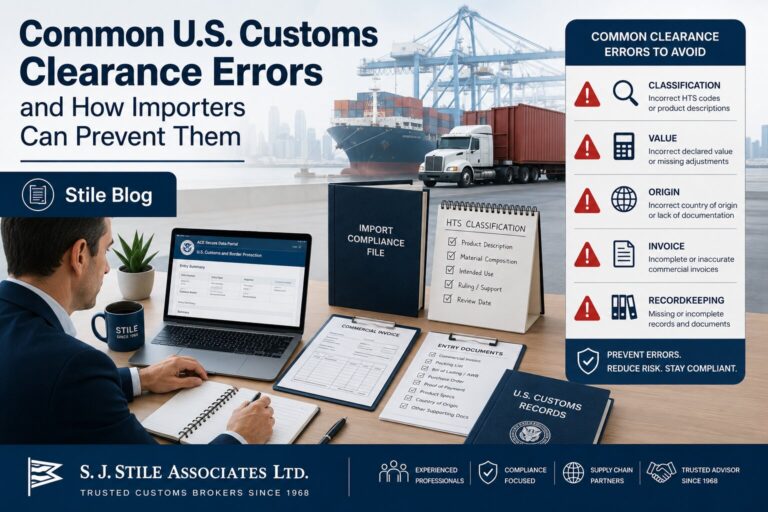
INTRODUCTION U.S. customs clearance is not only a logistics step. It is a regulated compliance process that depends on accurate…
 May 8, 2026
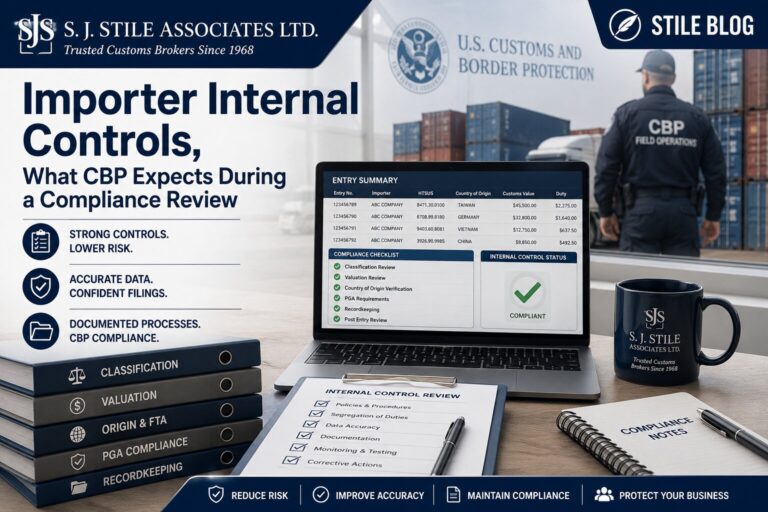
1. INTRODUCTION Importer internal controls are no longer just an accounting or operations issue. They are a customs compliance requirement…
 May 6, 2026
Introduction U.S. import operations depend on accuracy, timing, documentation, and communication. A shipment may be physically ready to move, the…
 May 4, 2026
1. INTRODUCTION Tariff classification is one of the most critical compliance responsibilities for U.S. importers. Every entry filed with U.S.…
 May 1, 2026
Introduction For many importers, the information available at the time of entry is not always final. Transfer prices may change…
 April 29, 2026
1. INTRODUCTION Unliquidated entries represent one of the most overlooked areas of customs compliance risk. While an entry remains unliquidated,…
 April 27, 2026
1. INTRODUCTION Errors in customs filings remain one of the most common sources of financial exposure for importers. Misclassification, valuation…
 April 23, 2026
1. INTRODUCTION Importer recordkeeping is not an administrative side issue. It is a core customs compliance obligation that affects admissibility,…
 April 20, 2026
1. INTRODUCTION For importers operating in the United States, compliance errors are not uncommon. Classification mistakes, valuation issues, or origin…
 April 17, 2026
1. INTRODUCTION Forced labor enforcement has become one of the most significant compliance risks facing U.S. importers. The enforcement of…
 April 15, 2026
1. INTRODUCTION Post entry corrections are one of the most misunderstood areas of U.S. customs compliance. Importers often assume that…
 April 10, 2026
1. INTRODUCTION Customs bonds are a foundational requirement in the U.S. import process, yet they remain widely misunderstood. As enforcement…