

Introduction
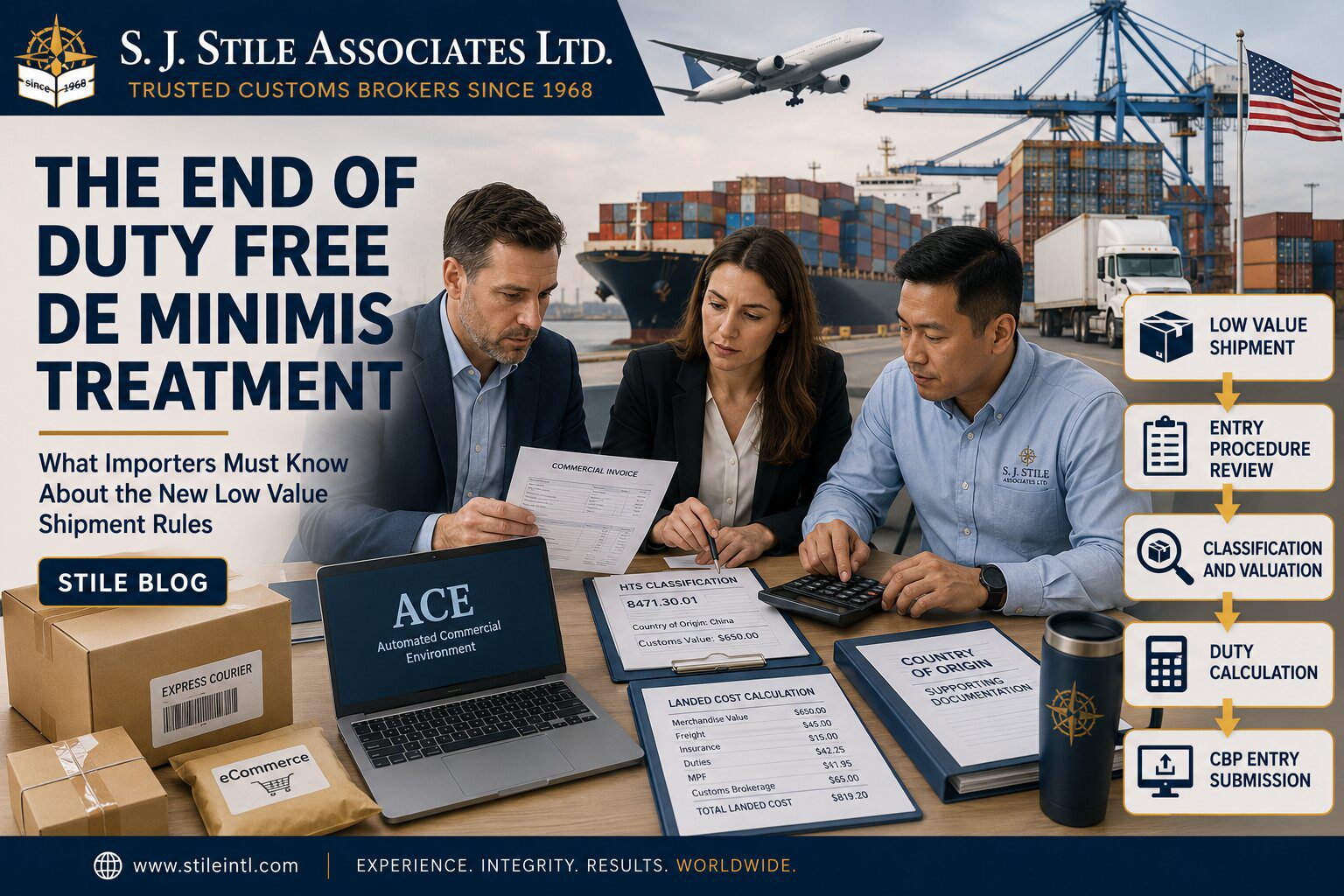
U.S. Customs and Border Protection has issued new regulations indefinitely suspending duty free de minimis treatment for most commercial shipments valued at $800 or less.
The rule became effective on June 24, 2026. Merchandise arriving by air, ocean, truck, rail, courier, or other nonpostal channels must now use an appropriate formal or informal entry procedure, even when its value does not exceed $800.
This change is particularly important for ecommerce businesses and importers that built their supply chains around high volumes of low value shipments.
Regulatory Context
Section 321 of the Tariff Act historically allowed CBP to administratively exempt qualifying shipments valued at $800 or less from duty and tax.
CBP has now amended its regulations to indefinitely suspend that exemption for merchandise arriving through channels other than the international postal network. According to CBP, the change is intended to improve duty collection, protect government revenue, strengthen enforcement, and identify unlawful or unsafe importations.
International postal shipments are governed by a separate rule. CBP has also introduced a voluntary ACE test for Entry Type 13, which provides an electronic informal entry option for certain qualifying international mail shipments valued at $2,500 or less.
What CBP Expects
Importers should no longer assume that a shipment qualifies for duty free release merely because its value is below $800.
Low value merchandise may now require:
- A formal or informal customs entry
- Accurate HTS classification
- Proper customs valuation
- Country of origin documentation
- Payment of applicable duties, taxes, and fees
- Partner Government Agency data
- Admissibility and recordkeeping documentation
Shipments subject to antidumping or countervailing duties, quotas, or certain agency requirements may require formal entry procedures regardless of their value.
Common Compliance Gaps
Importers may face problems when suppliers provide vague product descriptions, incomplete country of origin information, unsupported values, or incorrect HTS classifications.
Another common weakness is treating a courier, platform, or overseas seller as responsible for customs compliance. The importer of record remains responsible for the accuracy of the information submitted to CBP.
Businesses should also review whether their landed cost calculations still assume duty free de minimis treatment. An outdated pricing model may understate duties, brokerage charges, processing costs, and delivery expenses.
Practical Steps for Importers
Importers should take the following actions:
- Identify shipments previously entered under de minimis procedures.
- Confirm which party will act as importer of record.
- Review product classifications and country of origin determinations.
- Update landed cost and customer pricing calculations.
- Confirm that suppliers provide complete commercial invoices.
- Review Partner Government Agency requirements.
- Coordinate entry procedures with the customs broker before shipment.
- Monitor CBP Cargo Systems Messaging Service notices for implementation instructions.
Importers should also maintain written procedures explaining how low value shipments are reviewed, entered, and documented.
How S. J. Stile Associates Can Help
S. J. Stile Associates Ltd. can assist importers in evaluating how the suspension of de minimis treatment affects their current entry process.
Our customs brokerage team can review shipment data, HTS classifications, invoice descriptions, customs values, country of origin information, agency requirements, and appropriate entry procedures.
Early review can help reduce clearance delays, unexpected duty exposure, and inconsistent customs declarations.y errors earlier, improve the quality of information provided to the broker, and strengthen the company’s overall reasonable care position.
Frequently Asked Questions
Does the $800 threshold still provide automatic duty free treatment?
No. For most shipments arriving outside the international postal network, merchandise valued at $800 or less must now use an appropriate formal or informal entry process.
When did the new rule become effective?
The interim final rule became effective on June 24, 2026.
Yes. International mail is covered by separate regulations and entry procedures, including the new Entry Type 13 test for certain qualifying mail shipments.
Can low value merchandise still require a formal entry?
Yes. Formal entry may be required when merchandise is subject to antidumping or countervailing duties, quotas, specific agency requirements, or other restrictions.
Who is responsible for the accuracy of the customs entry?
The importer of record is ultimately responsible for exercising reasonable care and providing accurate classification, value, origin, and admissibility information.
References
- U.S. Customs and Border Protection, CBP Modernizes Low Value Shipment Processing.
- Federal Register, Indefinite Suspension of the De Minimis Exemption for Merchandise Arriving Through All Modes Other Than the International Postal Network, June 24, 2026.
- Federal Register, Indefinite Suspension of the De Minimis Exemption for Mail Shipments and New Postal Informal Entry Process.
- Federal Register, Test of the New Electronic Informal Entry Process for Mail.
- CBP, Cargo Systems Messaging Service.
The Stile Associates Advantage
- More than 55 years of continuous industry experience
- Family leadership with modern trade vision
- Licensed Customs Brokers and compliance professionals
- CTPAT certified supply chain security
- Full service customs and logistics solutions
- Technology driven visibility and control
- Dedicated, personalized client service
- Nationwide U.S. coverage with global support
Choosing S.J. Stile Associates means partnering with a customs broker that understands the realities of today’s trade environment and is fully invested in protecting your business.
Contact S.J. Stile Associates today to learn how we can strengthen your compliance posture and streamline your supply chain.


We’re not just a broker; we’re your strategic compliance partner.
Since 1968, our clients have trusted us to:
- Navigate regulatory shocks
- Deliver personal service from our NYC, Miami, and LA offices
- Build resilient import strategies that drive growth
In this new trade era, trust is everything , and that’s why importers stay with Stile for years.

Call to Action
At Stile Associates, we combine over 55 years of experience with the latest technology to keep your imports compliant and efficient.
Contact us today to explore how AI-driven solutions can optimize your customs operations.


📣 Final Call to Action:
Ready to take control of your shipping costs?
Let’s talk. Contact Stile Associates for a free consultation and let our experts audit your current process, to help you streamline your operations, stay compliant, and save money.

💼 Choose Stile, Your Smartest Move in Global Trade
Whether you’re shipping across the country or across continents, Stile Associates is your strategic partner for building a smarter, more resilient supply chain.
📍 Since 1968, we’ve been delivering peace of mind and performance. Let’s take your logistics to the next level together.
🌐 Visit us at www.stileintl.com
📩 Or contact: stevenheid@stileintl.com
Stile Associates – Trusted. Proven. Personal.
Stile Real Time Cargo Tracking with Global Visibility.

